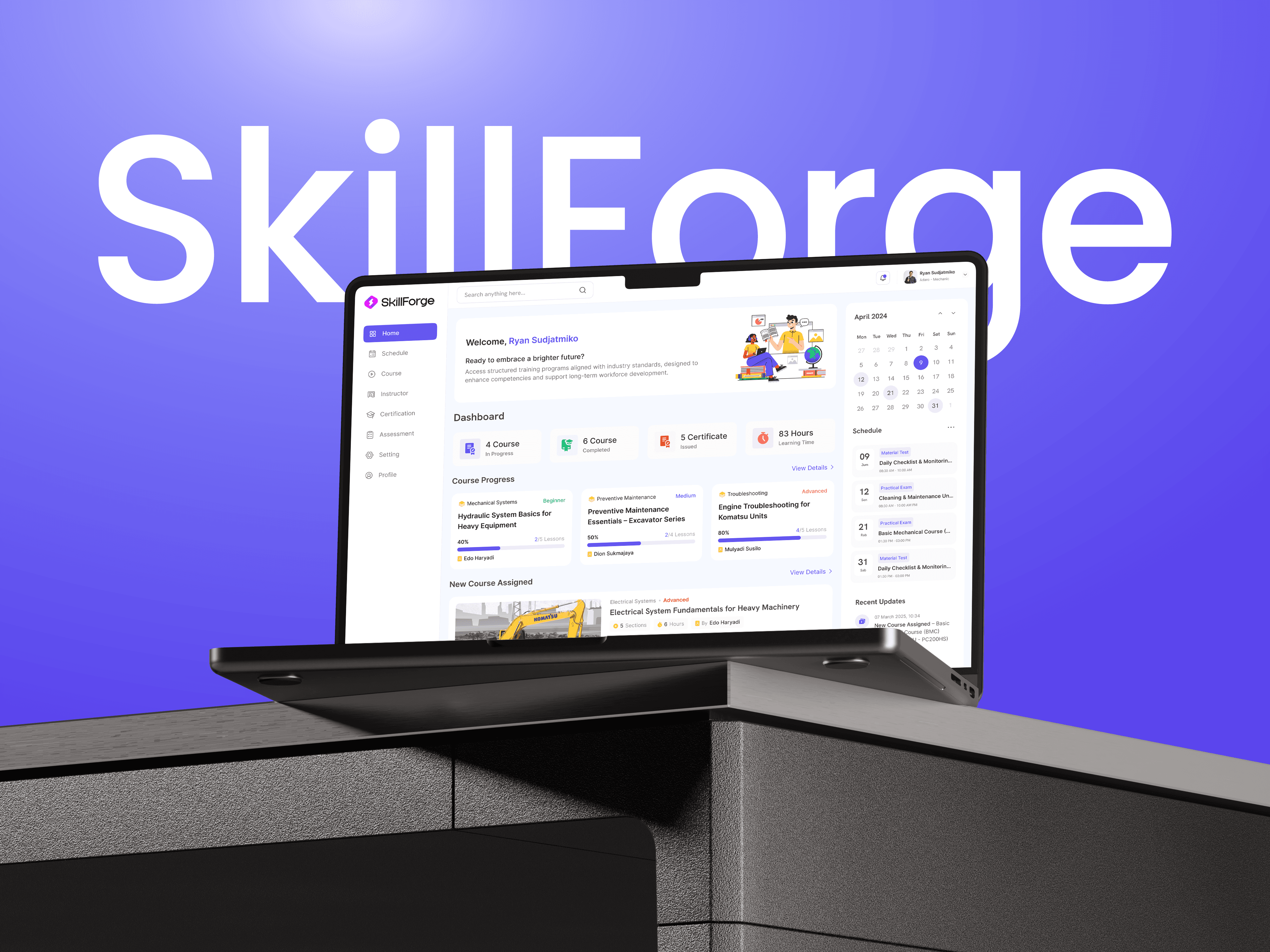
We needed a full redesign—not just to fix usability, but to align the platform with Individual Development Plans (IDPs) and create a smoother, scalable learning experience across the organization.
Designing SkillForge wasn’t just about making screens look good, it was about solving real problems mechanics face when learning and getting certified. Here’s how the process went:
To uncover real pain points, we interviewed four key user groups: organic mechanics, outsourced mechanics, certification assessors, and supervisors. Each offered distinct perspectives on how they use the system, their daily struggles, friction points, and expectations for a smoother, more motivating learning experience.
Ahmad - Organic Mechanic
What we changed : The new platform connects directly to each worker’s IDP, so Ahmad gets personalized course suggestions without the guesswork.
Budi - Organic Mechanic
What we changed : We designed clearer task guidance, streamlined learning flows, and built-in notifications to help users like Budi stay engaged without constant supervision.
Rini - Instructor
What we changed : We introduced automatic exam correction, inline essay review, and data export features, cutting review time while keeping grading more consistent.
Rini - Instructor
What we changed : We built a unified dashboard with filters and real-time updates, allowing supervisors to track learning progress at a glance and make faster decisions.
STAKEHOLDER INTERVIEW
Aligning Vision with Those Who Shape The Business Direction.
To understand the strategic direction behind the certification program, we conducted interviews with several key stakeholders. Their input helped us understand the importance of IDP integration, system scalability, and the need for a role-based course experience.
Details Process
Interview with Stakeholder
Key Insight
Certification Must Align with HR IDP Structure
Supervisors Need Easier Tracking Tools
Content Library Must Be Modular for Future Expansion
To ground our redesign in real-world standards, we conducted a comparative study of both specialized learning management systems and mainstream online course platforms. This helped us identify feature gaps and prioritize functionality that directly supports field operations.
Platform
Course Type
Role
Based Course
Exam Feature
Question Bank
Grading Method

Assigned via IDP & by supervisor
MCQ & Essay
Fully custom bank per course
Auto-grade & manual review

Assigned & self-picked
All type, incl. essay
Advanced quiz bank
Auto-grade & manual review

Manual & template based
Basic quiz
Available
Auto-grade & manual review

Assigned by admin
Basic quiz
Available
Auto-grade only

Self-picked
Quiz
No bank feature
Auto-grade only
Self-picked
No formal exam
No bank feature
Project based

Self or intitution-assigned
Quiz + peer review
No bank feature
Auto-grade & peer review
From our interviews, we distilled user insights into realistic personas that represent key roles within the certification process. These personas guided our decisions across UI design, content structure, and role-based feature logic.





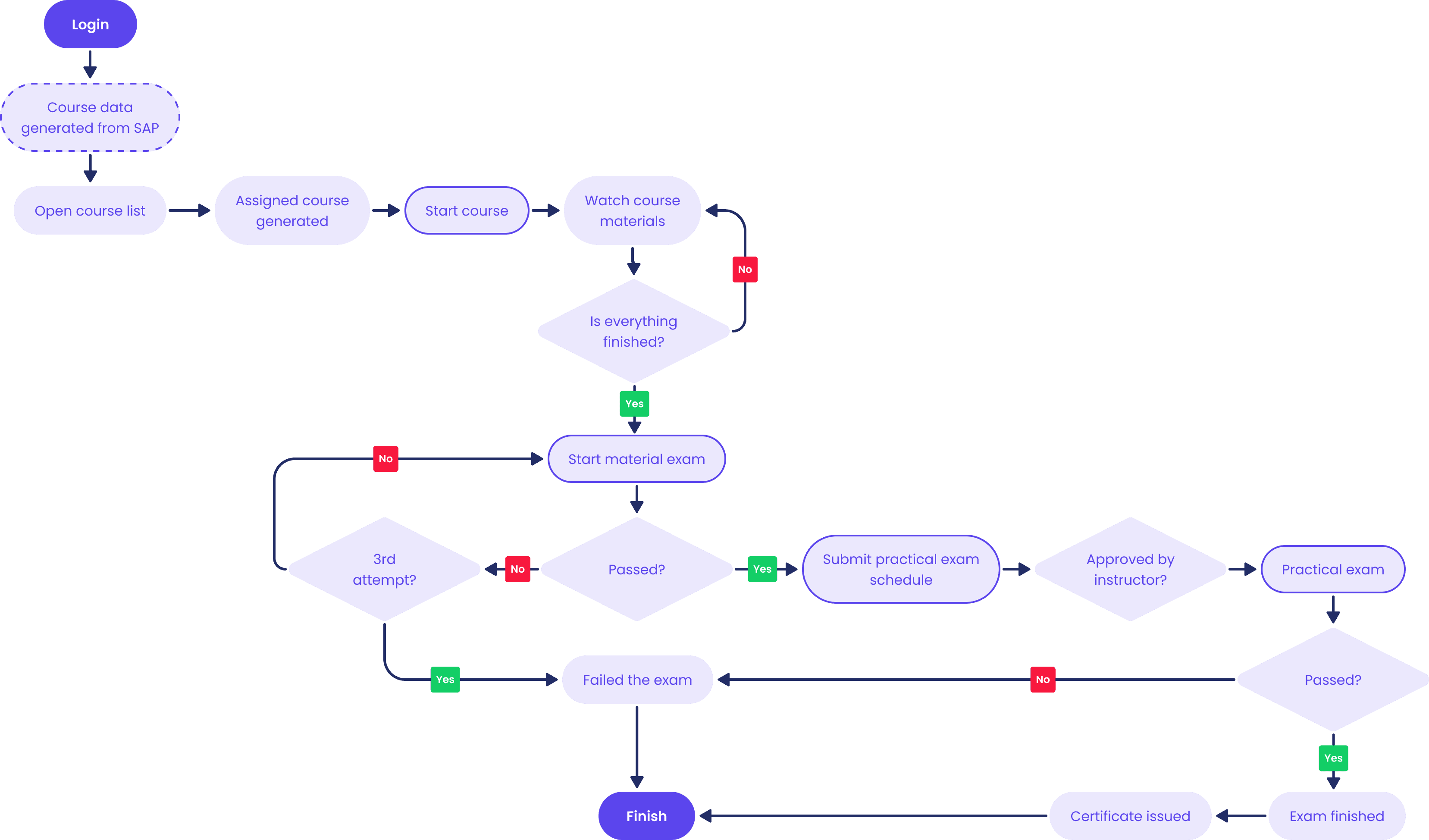
We mapped the flow based on real case, not assumptions. Each step was crafted to match how users actually work in the field, making the process simpler, faster, and more efficient.
This flow explains the process from mechanic logging into SkillForge, selecting a course, taking the exam, scheduling a practical exam, to receiving the exam certificate.
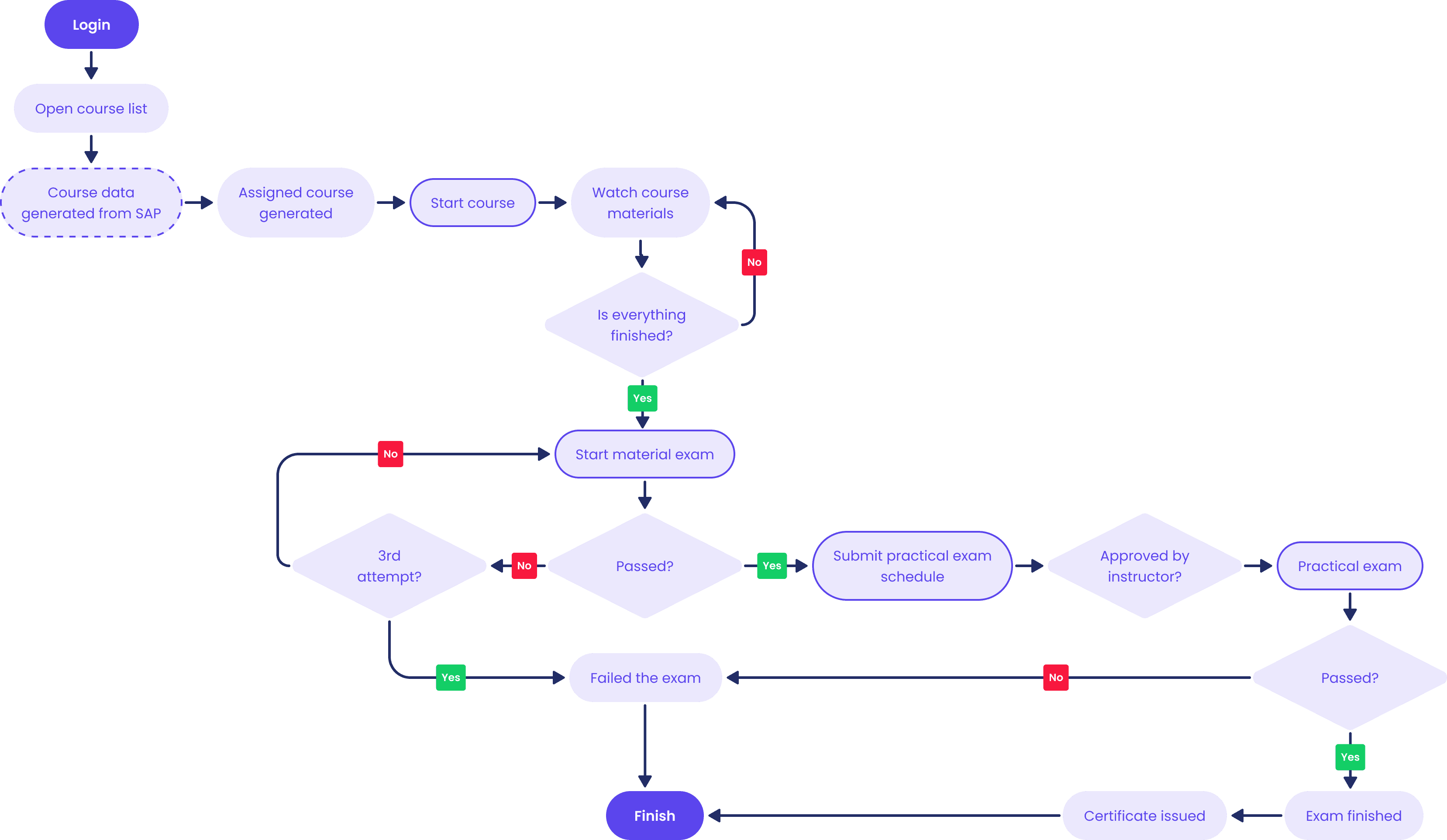
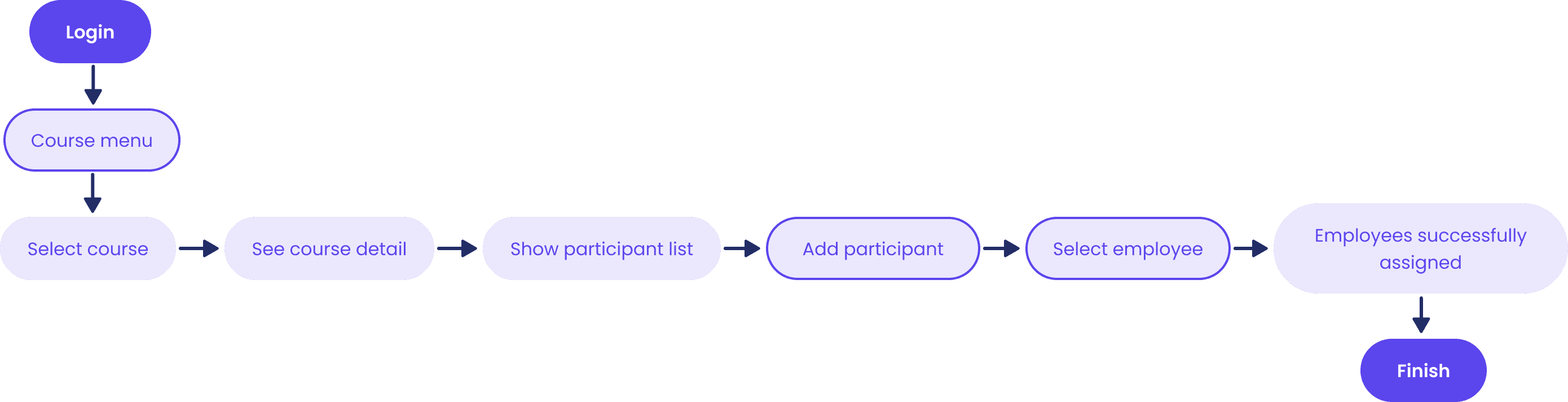
Supervisors can monitor what courses are available, then assign a team of mechanics in their area to join the course if they are not already registered.
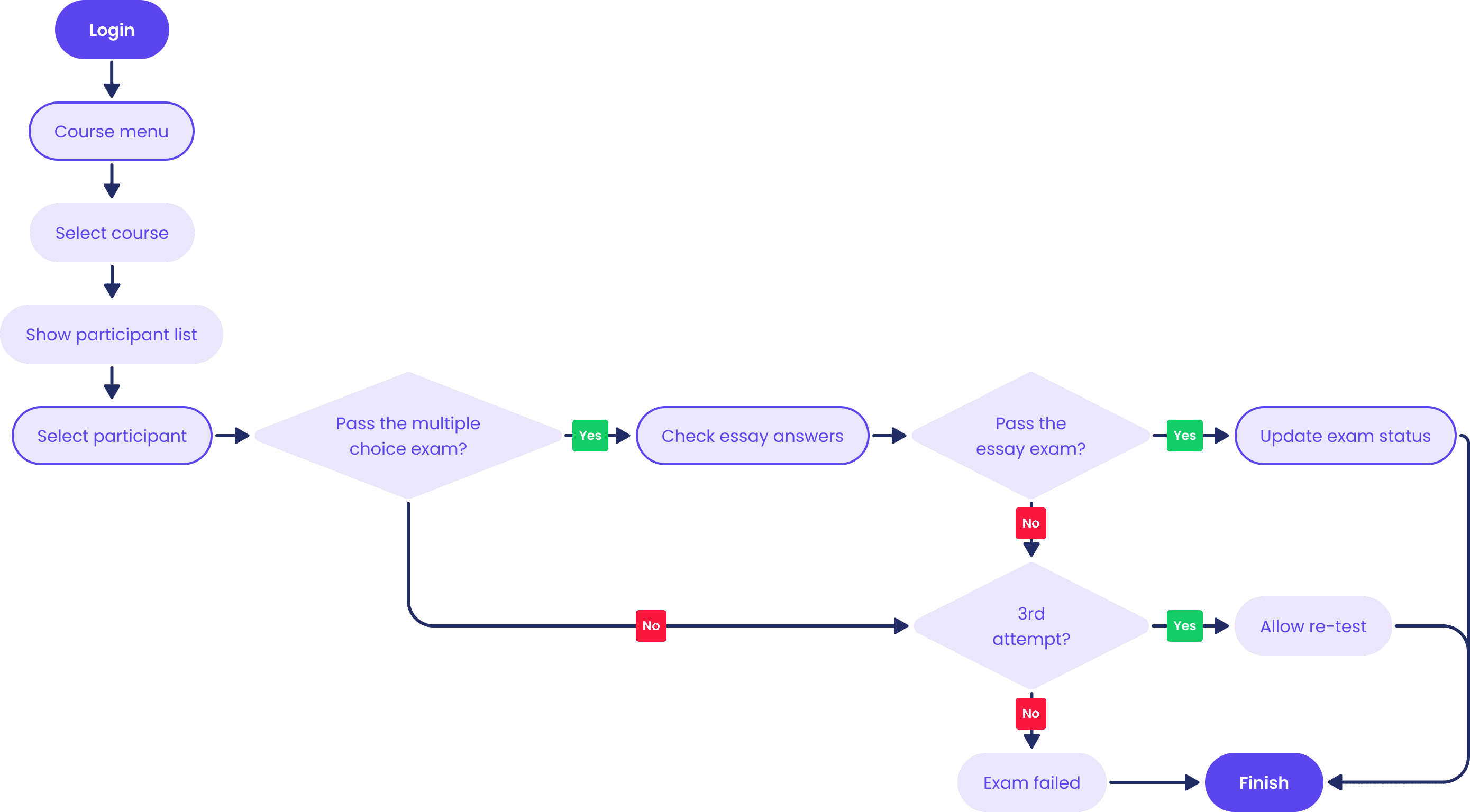
After the mechanic completes the theory test, the system will automatically correct the multiple choice answers, but the instructor will assess the essay answers and determine whether the mechanic passes the theory test and is then allowed to take the practical test.
DESIGN GUIDELINE
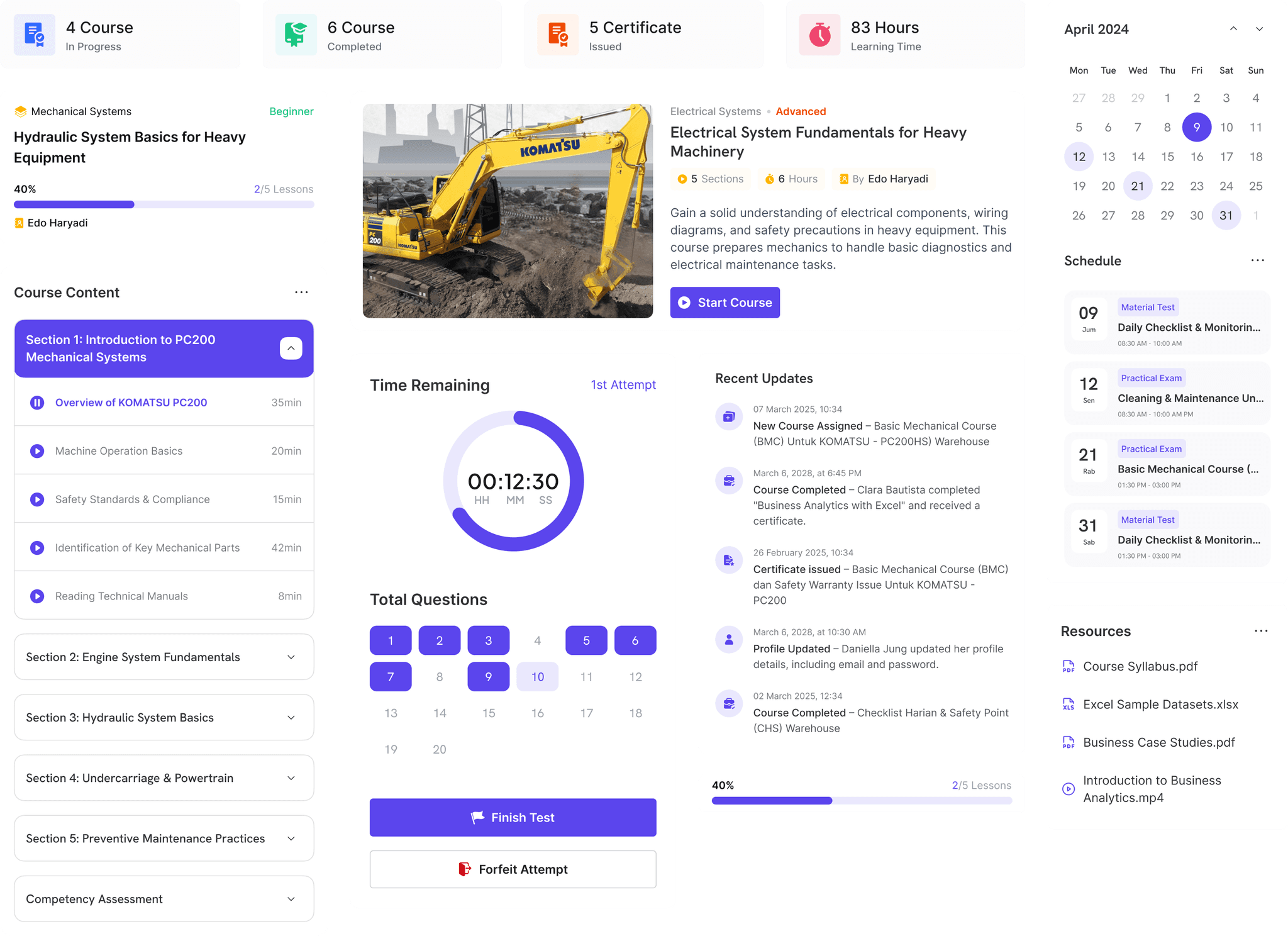
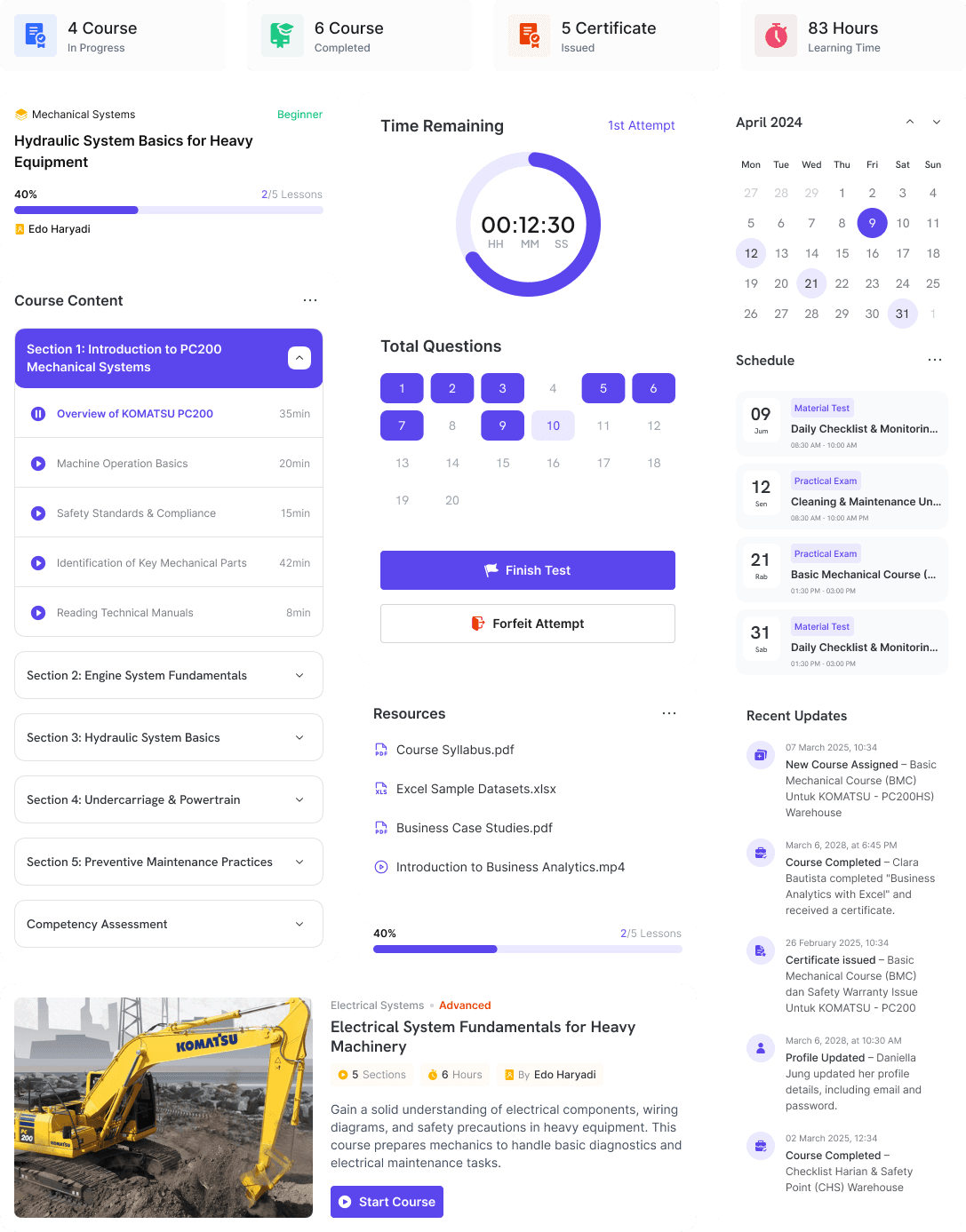
We create a design guideline concept consisting of color combinations, typography, and logo concepts. This guideline will be used for branding needs, UI design, publications, and others.
Main Font
Inter
Light
Regular
Medium
Bold
Black
The Royal Indigo (#5B45ED) represents creativity, intelligence, and forward-thinking, a perfect hue for a product that blends logic and imagination.
Paired with Golden Amber (#FFB300) as an accent, it brings warmth, optimism, and energy to every interaction. Together, they create a visual rhythm that feels both confident and inspiring.
We chose Inter because it was designed for digital interfaces from the ground up. Its clean geometry and generous spacing make long reading sessions easier on the eyes, while its versatility across weights keeps the UI structured yet approachable.

VALIDATION
We conducted usability testing with selected users to validate the design’s efficiency and clarity. The goal was to observe how easily they could complete key tasks, understand navigation flow, and interpret visual cues without guidance.
Group 1 : Testing with the Frontline Users
Task List
User 1
User 2
User 3
User 4
User 5
Login & Select Course

View Course Details

Take Theory Exam
View Exam Result & Certificate
User Highlight
Smooth overall, no issues.
Minor confusion in theory test
Navigation flow can be smoother.
Smooth overall, no issues.
Smooth overall, no issues.
Task List
Positive (Smooth)
Neutral (Minor Struggle)
Negative (Failed/Big Struggle)
Usability Score
Login & Select Course
5/5
0/5
0/5
100
View Course Details
3/5
2/5
0/5
80
Take Theory Exam
4/5
1/5
0/5
90
View Exam Result & Certificate
5/5
0/5
0/5
100
Overall average usability score :
92.5
Notes & Insight
Overall usability performance is strong, with most tasks scoring above 90 and an average of 92.5, showing that the platform feels intuitive and easy to navigate.
The only area needing improvement is the course detail page, where two users hesitated, indicating a need for clearer hierarchy and better visual cues.